Understanding Data Centres
The digital infrastructure behind everyday life
Everyday digital services need real infrastructure.
When you check traffic, pay for groceries, book a medical appointment, check social media, stream a show, join a video call, use online banking, or send a message, data moves behind the scenes.
That data is not floating in the sky. It is stored, processed, and delivered through physical infrastructure, including data centres.
As demand for cloud computing, artificial intelligence and always-on connectivity grows, data centres have become as essential to modern society as electricity, water and transport networks. Understanding what data centres are and how they work helps explain why they matter to communities, businesses and economies.

What is a data centre?
Data centres are the secure buildings that help keep digital services available 24/7. They support the apps, systems and online tools that people, businesses, schools, hospitals, and governments rely on every day.
Inside a data centre are powerful computers called servers. These servers store, process and deliver data for services people use every day. In this sense, data centres function like giant digital warehouses – instead of physical goods, they manage information.
Data centres are designed to operate continuously, in carefully controlled environments, so digital services remain fast, secure and available whenever needed.
Why do we need data centres – and who uses them?
Just as cities need roads, ports and power grids, the digital world depends on physical infrastructure.
Computers have always needed a place to store and process information. In the past, this happened inside individual computers or small server rooms tucked away in offices. As digital services expanded and data volumes grew, those functions moved into larger, purpose-built facilities designed to handle scale, security and reliability.
Today, everyone uses data centres, directly or indirectly:
- Individuals rely on them for apps, messaging, shopping and entertainment
- Businesses depend on them for payments, logistics, data storage and operations
- Governments and essential services rely on them for healthcare, transport, public safety and emergency response
Every time someone sends an email, streams a video, goes on social media, pays at a checkout or uses an online service, a data centre is making it possible
What is the cloud and how does it relate to data centres?
“The cloud” is not in the sky.
It is a network of data centres and communications networks that store and deliver digital content. When people save photos, access apps or stream content, that data is stored and processed in data centres.
Storing and processing data in data centres can be more reliable, secure and efficient than every organisation running its own server room. When data is needed, it is delivered almost instantly from the data centre to the user, creating the seamless digital experiences people expect.
What are the benefits of data centres?
Data centres are essential digital infrastructure that underpin everyday life and critical services. Without data centres, the modern digital world would not function. They store and process the data that allows people and organisations to stay connected and operate reliably every day.
Because data centres operate continuously and at scale, they help ensure these essential digital services remain available, even during periods of high demand or unexpected disruption.
Beyond supporting essential digital services, data centres also contribute to economic growth, local infrastructure and community development. They attract investment, enable businesses to adopt advanced digital technologies, and provide the reliable infrastructure needed for innovation and future industries.
Data centres also create jobs during construction and long-term operations across engineering, security, maintenance and facility management. New developments can support upgrades to fibre networks, power systems and utilities that benefit surrounding communities and future development. AirTrunk also partner with schools, TAFEs and universities to support STEM education, apprenticeships and skills development, while generating ongoing demand for local suppliers and service providers.
How are data centres built – and what’s inside them?
Data centres are engineered for performance, resilience and safety.
Inside, they contain:
- Rows of servers that store and process data
- Cooling systems to manage heat from servers
- Power systems and backup systems to support continuity
- Secure access controls to protect equipment
- Fibre connections so data can move quickly
- Monitoring systems so teams can manage the facility safely
Because they operate around the clock, data centres are designed with redundancy throughout – meaning that if one system fails, others can take over. This helps prevent outages that could disrupt essential services such as payments, flights, hospital systems or emergency communications.
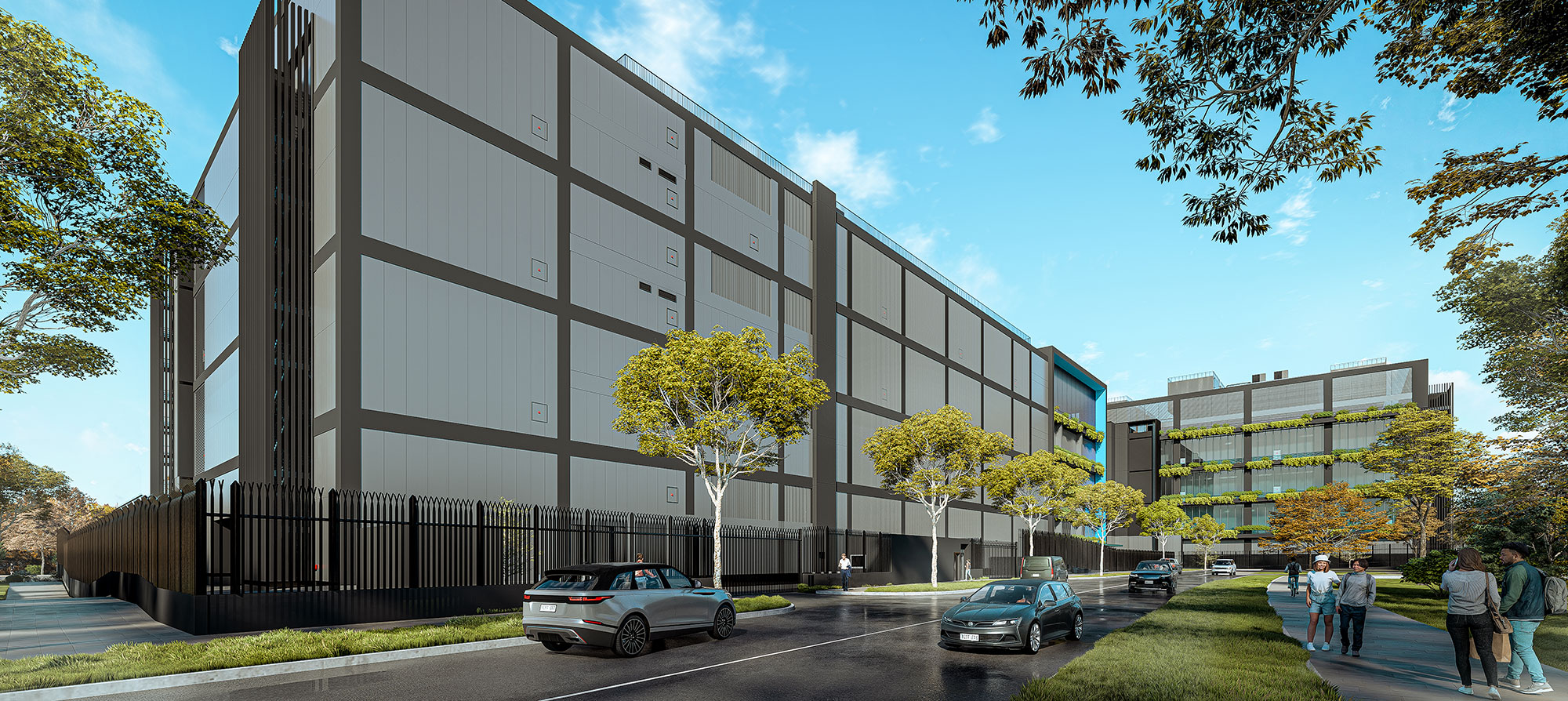
From the outside, data centres often appear as large, modern industrial buildings. Inside, they are highly organised, clean and carefully controlled environments built to strict planning, environmental and safety standards.
Frequently asked questions
Data centres need to be physically close to the people and businesses using them. Physical proximity helps digital services respond more quickly, known as low latency. They also depend on existing infrastructure such as reliable electricity, fibre networks and transport. Choosing the right site helps balance speed, reliability, and community impact, while meeting strict planning and environmental standards.
Yes. Data centres are generally considered safe, low-impact neighbours. They are typically built in industrial-zoned areas, follow strict planning, environmental and safety standards, and do not involve heavy manufacturing or chemical processing. The activity inside is primarily computing equipment operating in temperature-controlled rooms, making them more comparable to modern commercial buildings than factories.
Data centres are designed to operate within strict noise regulations. Modern facilities use advanced cooling systems, acoustic treatments and noise monitoring to minimise impact on nearby communities. Operators are typically required to comply with local planning and environmental noise limits.
Data centres use energy continuously to run servers and cooling systems. The industry is shifting rapidly toward renewable electricity.
At AirTrunk, we are committed to achieving Net Zero emissions by 2030 and to match 100% of electricity consumption at our data centres with renewable energy sources, working alongside customers and energy providers.
AirTrunk reports an operational Power Usage Effectiveness (PUE) of approximately 1.32, significantly better than the global industry average, which is commonly estimated at around 1.6. Lower PUE means more electricity is used for computing rather than overhead such as cooling.
It varies. Water is often used in cooling systems because it’s an efficient way to remove heat, which lowers electricity use overall. Other facilities use little or no water and rely on air-based cooling instead. Responsible operators measure and report water use, prioritise recycled or non-potable water where available, and design systems to minimise consumption, especially in water-stressed regions.
AirTrunk’s water resilience strategy ensures sustainable, responsible, and productive use of water. AirTrunk is investing in recycled water systems, liquid cooling technology, and pursuing alternative water sources in water stressed regions.
Data centre operators manage the physical facility, including power, cooling, security and building infrastructure. They do not access to or control the data stored on their customers’ servers.
The organisations using the data centre manage their own equipment and data security, using measures such as encryption, locked cabinets and strict access controls. Physical access to equipment areas is tightly controlled and typically limited to authorised personnel.
During construction of a data centre, responsible operators work with local councils and contractors to manage impacts during construction, including traffic management, approved working hours, dust and noise controls, and community contact channels for questions or concerns.
Once operational, data centres generally have relatively low day-to-day traffic compared with many other industrial facilities.
From the outside, data centres are typically large industrial or commercial buildings, similar in appearance to logistics facilities, warehouses or modern manufacturing buildings.
Operators often incorporate landscaping, setbacks, screening and architectural finishes to align with local planning requirements and surrounding development. In many countries, proposed data centres undergo planning assessment processes that may include consideration of visual impact, traffic, noise and environmental factors.
AirTrunk works with planners, councils and local communities to help ensure facilities are designed appropriately for the areas in which they operate.